This section includes various artifacts and reflections. Each post highlights key learning experiences and professional growth in my nursing journey.
Parallel Poetry
This poem originally written by Perry (2009) shows the parallel between how nurses care for patients and they grow and learn with them. Verse four is my own personal addition to the poem.

I am Your Nurse

I ease your pain.
I bathe your skin.
I make your bed.
I help you dress.
I meet your needs.
You heal me.

I am your nurse.
I feed you meals.
I give you rest.
I tend your wounds.
I sense your suffering.
I answer your questions.
You teach me.

I am your nurse.
I know your pain.
I share your loneliness.
I feel your despair.
I taste your joy.
I sense your spirit.
You touch my soul.

I am your nurse.
I hear your words.
I listen with empathy.
I acknowledge your feelings.
I feel your sadness.
I address your concerns.
I give you hope.
In every life I touch from here, you remain a part.

And sometimes,
for just a moment,
I am you,
and you are me,
and we are one.

Together,
we go beyond the limits
of ordinary experience,
to live the extraordinary.

I am Your Nurse (Perry, 2009, p. 24).
Verse 4 by Victoria Murray

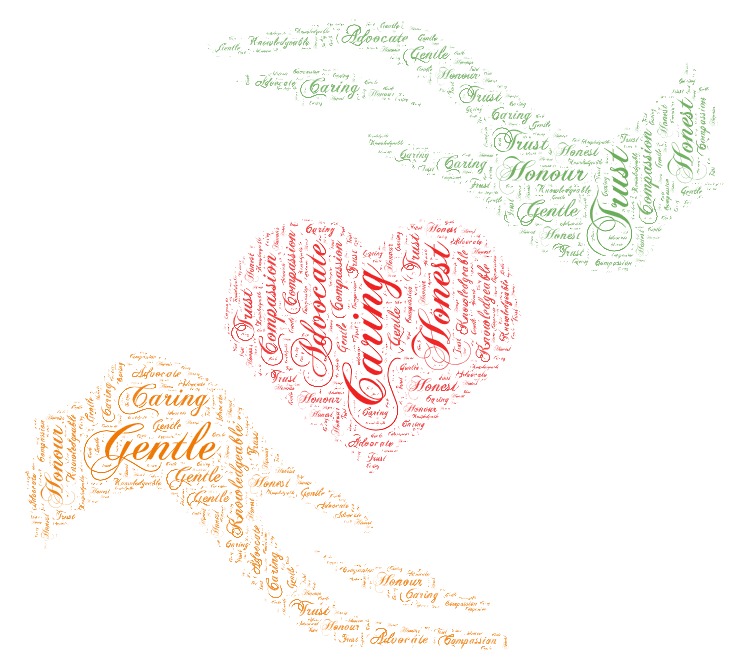
 What nursing means to me depicted in a photo

To me, being a nurse means providing compassionate care to those who are unable to care for themselves or need support in doing so. This includes individuals facing temporary illness, managing chronic conditions, or approaching the end of life.
- 08j6wvtq.png(731.07 KB)
Technology Is Re-Shaping Nursing and So Are We
When I think about how technology is reshaping nursing theory and practice, I’m struck by how quickly the profession is evolving. Glauser (2017) described technology as “shaking up” nursing, and that feels even more true today. In my own experience, the shift isn’t just about adding new tools, it’s about rethinking what it means to provide care.
Electronic health records were the first major change I experienced. They streamlined documentation but also required me to balance screen time with patient time. Early on, I worried that technology might distance nurses from the human side of care. Instead, I’ve found that when used intentionally, it frees us to focus more deeply on patients by reducing repetitive tasks and surfacing information we might otherwise overlook.
Clinical decision-support systems have also influenced how I think. Nursing theory has always emphasized critical thinking, but now technology amplifies that process by giving real-time alerts, trend analysis, and evidence-based suggestions. Rather than replacing judgment, it sharpens it. I’ve learned to interpret digital data through the lens of nursing frameworks (holism, patient-centered care, and therapeutic communication) so that technology enhances rather than overrides our foundational principles.
Perhaps the most profound shift has come from telehealth and remote monitoring. These innovations challenge traditional assumptions about presence, proximity, and assessment. I now view “being with” a patient as something that can extend beyond physical space, requiring new communication skills and new forms of trust-building. It’s a reminder that nursing theory must evolve to include virtual forms of connection and advocacy.
Technology hasn’t changed the heart of nursing, but it has broadened its reach. As nurses, we’re not just adapting to new tools; we’re actively shaping how technology supports compassionate, safe, and holistic care. And that, to me, is the most exciting part of this ongoing transformation.
 Victoria Murray MScN Student